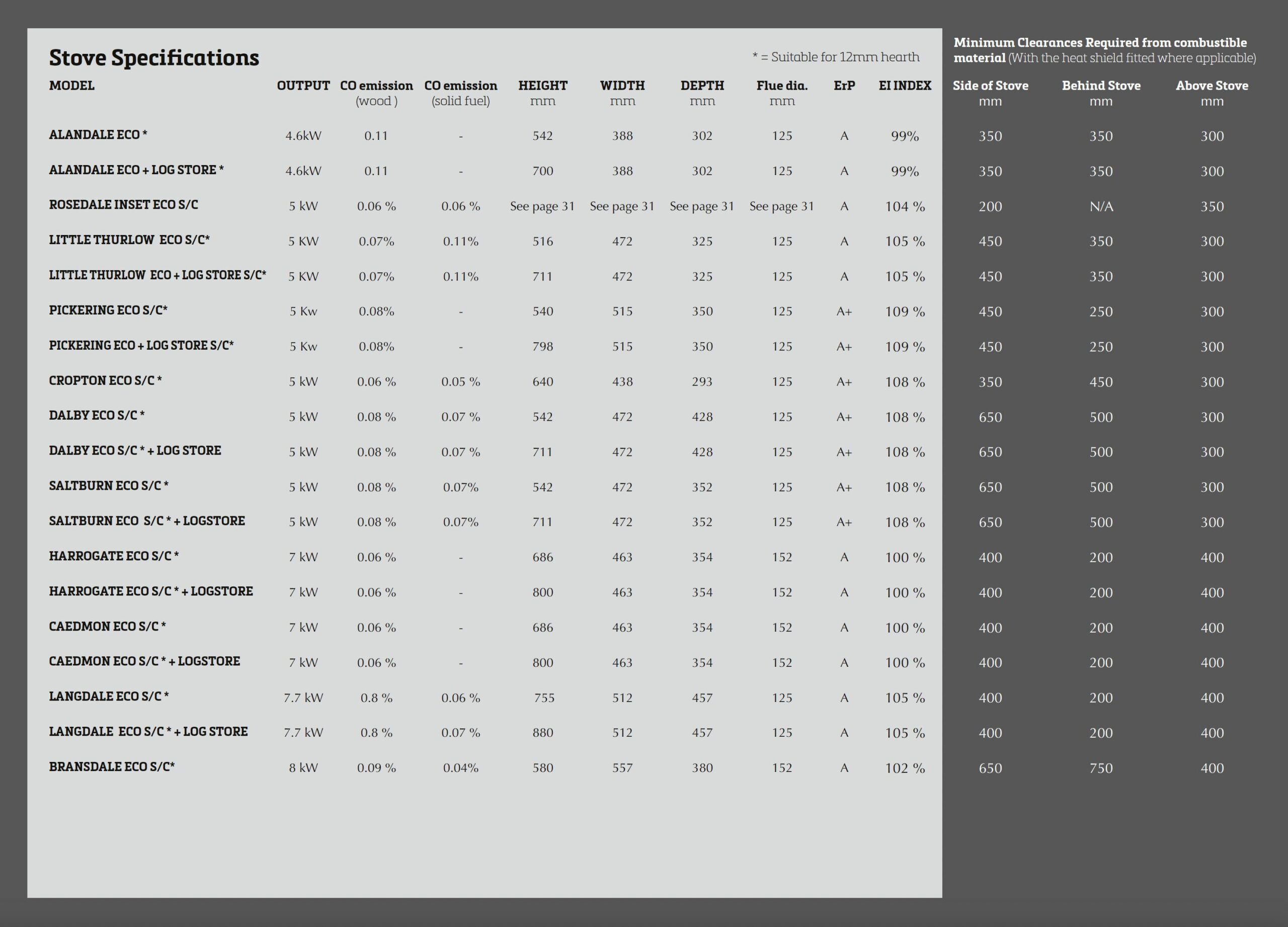

Breaking Down the Stove Specifications
Looking for a new stove should be an enjoyable experience. Whether it is finding one that suits the fireplace you’ve lovingly designed and built, or choosing a colour that matches your meticulous decor. However, finding and understanding what specifications are right for you, can be confusing and time-consuming.
We’re here to break down the numbers for you, so you can make a meaningful and stress-free decision when it comes to your stove. Disclaimer: you should always speak to an expert and one of our recommended suppliers when choosing and installing your stove.
What output do I need to look for?
The first thing you need to consider when choosing your stove is the output. Which output you go with largely depends on the size of the room you are trying to heat.
What is a good level of CO emissions?
Quite simply, a good level of CO emissions for a stove is as close to zero as possible.
Knowing the carbon monoxide (CO) emissions emitted from a stove is important for several reasons, all related to safety, health, and environmental concerns.
It can assist you in choosing a model that is designed to emit lower levels of CO, promoting a safer and more efficient stove.
Flue Diameter
The flue diameter is a crucial specification to consider when installing a stove, as it affects the efficiency and safety of the combustion process.
The flue diameter is usually measured in inches or millimetres, and it can vary based on the type of appliance, the size of the heating unit, the type of fuel being burned, and local building codes and regulations. It influences the proper drafting of exhaust gases, which helps prevent backdrafts, poor combustion, and potential health hazards from gases like carbon monoxide.
Each stove will have specific guidelines, but the general rule of thumb is that the flue diameter should match the outlet diameter of the appliance.
ErP
ErP stands for Energy Rated Products. You can find a link to the gov website here.
It refers to a set of EU regulations aimed at improving the energy efficiency and environmental performance of various products that consume energy, including stoves.
The goal of the ErP regulations is to reduce energy consumption, lower greenhouse gas emissions, and encourage the use of more environmentally friendly technologies.
The scale ranges from A+++ for the most efficient to D for the least efficient.
EEI Energy Efficiency Index
EEI, otherwise known as the Energy Efficiency Index, is a rating system used to measure and compare the energy efficiency of your stove.
It’s another initiative from the EU and is designed to help you make more informed choices. The EEI index provides information about how efficiently a stove converts the energy in the wood into usable heat for your home.
The EEI index takes into account various factors that affect a stove’s efficiency. Including combustion efficiency, heat output, and the stove’s design. The lower the EEI index value, the more efficient the stove is at converting wood fuel into heat.
Minimum clearances required from combustible material
Minimum clearances required from combustible materials refer to the specified distances that the stove must be installed from surfaces that can catch fire. These surfaces are often referred to as combustible materials and include wood, drywall, insulation, and other flammable substances commonly found in your home.
There are three measurements to take into account for the minimum clearance – the side of the stove, above the stove and behind the stove.
It’s not uncommon for the plan of where your stove will go to change once these measurements have been taken, and it’s important to consider this in the very first instances of your room design.
Speak to an Expert
We hope that by breaking down the different stove specifications you can make a more informed decision about your stove.
It’s important to find a trusted supplier of our stoves who will be an expert in all of these areas and be able to advise you on the best stove for your home.
You can find your nearest supplier of Town & Country Fires stoves here or if you’d like to talk to us directly you can contact us here.