
The Discussion was Sparked
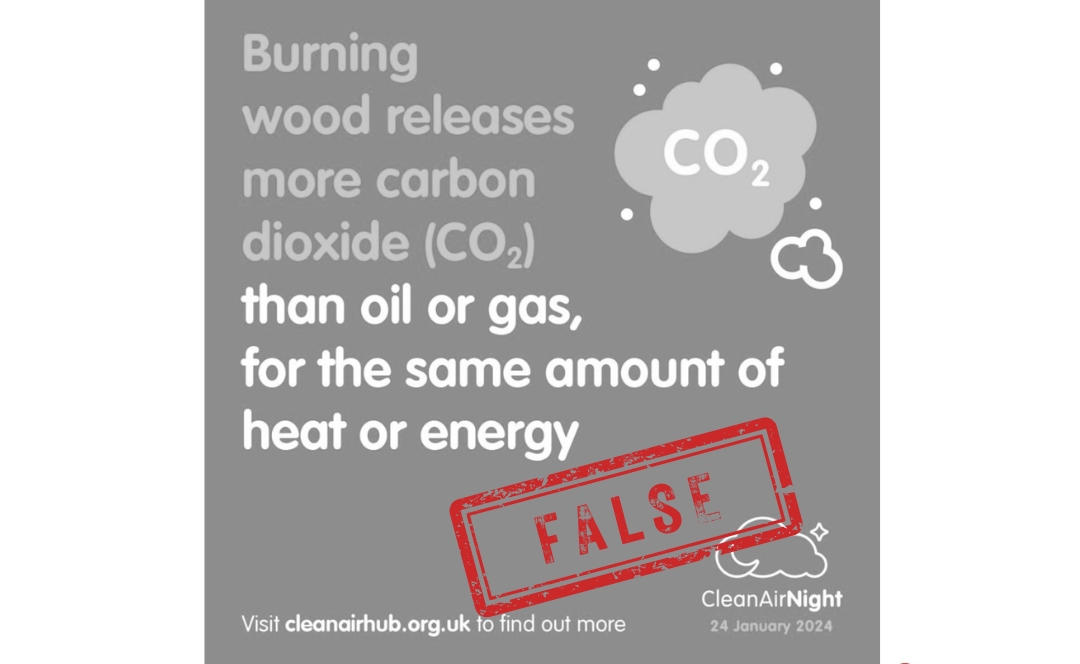
Clean Air Night 2024, which was on Wednesday 24th January, sparked discussions surrounding what campaigners are terming the “uncomfortable truth about wood burning.” This event follows a season marked by an onslaught of anti-burning messages from well-funded groups such as Mums for Lungs, London Wood Burning Project, and Global Action Plan/Clean Air Hub.
Fearmongering over Facts
Criticism from these groups often paints wood burning in a negative light, employing sensationalist tactics to condemn all forms of domestic burning without providing balanced education on sustainable solid fuel stove usage. The messaging is rife with misleading and sometimes false claims, aimed more at fear-mongering than at informing the public.
What are the facts about wood-burning?
A major flaw in these campaigns lies in their reliance on flawed data and broad generalizations. For instance, claims made by the London Wood Burning Project and cleanairhub.org.uk fail to distinguish between different methods of burning wood, lumping together practices like garden bonfires with the use of Ecodesign-compliant stoves. However, data from the National Atmospheric Emissions Inventory (NAEI) indicates that burning dry wood on such stoves accounted for less than 0.1% of total UK PM2.5 emissions in 2021.
Contrary to the negative portrayal of wood burning, modern stoves offer numerous benefits. Studies show that households using dry wood fuel in Ecodesign-compliant stoves could save up to 7% on annual heating bills, with even greater savings possible using smokeless solid fuel. Additionally, using sustainable wood fuel instead of fossil fuel gas can result in significant carbon savings.
Addressing misleading comparisons, claims suggesting wood-burning stoves are six times more polluting than HGVs are refuted. Such claims oversimplify calculations and fail to consider real-world usage scenarios. In practical terms, over a week, an HGV emits 13 times more PM2.5 than an Ecodesign stove, emphasizing the importance of contextual understanding in these comparisons.
Similarly, claims by groups like Mums for Lungs often lack context. Comparing PM2.5 emissions from burning dry wood to those from cigarette smoking reveals a stark contrast, with smoking accounting for 12 times more PM2.5 emissions than wood-burning stoves.
Amidst these misconceptions, the Stove Industry Association (SIA) advocates for informed decision-making and encourages the adoption of modern, Ecodesign-compliant stoves. These stoves significantly reduce emissions compared to open fires and older models, aligning with efforts to achieve net zero objectives.
All stoves made by us at Town & Country Fires are ecodesign-compliant, you can see details of all our stoves here.
Finding more information
In conclusion, Clean Air Night 2024 served as an opportunity to debunk misconceptions surrounding wood burning. By promoting factual information and encouraging the use of sustainable solid fuel stoves, consumers can make informed choices that benefit both their households and the environment.
For further information on the benefits of modern stoves and guidance on usage, individuals can refer to resources provided by the SIA.
Information for this post is from this article.